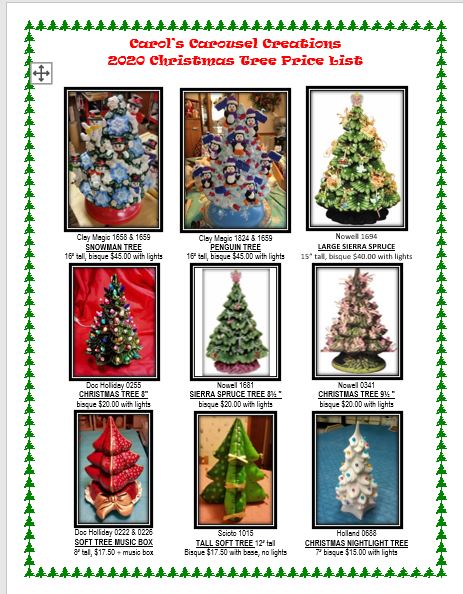
Wow! This Tuesday is the 1st of December already! And we revisit the year with no holidays. February we went to the IADCCT Convention in Las Vegas. Came home and shared some of what we learned with other members and friends. Classes went on as usual and we prepared a special Easter Workshop with a basket, a chocolate bunny, and Easter eggs to be painted with Mud. Then COVID hit and the bisque is still sitting on my shelf.

No Easter, no Mother’s Day, Father’s Day, birthdays, family picnic in June, Card club picnic in July, Star Trek Club picnic in August, Halloween party, nor Thanksgiving. Ceramic shows and Open houses were cancelled.
So how do we find the POSITIVE in all of this self-isolation?
We learn to use technology.
March 22 was our first Facebook live workshop and we had Kids Krafts project on Wednesdays and an adult project on Fridays. Then we went to just Fridays and integrated the kids version into the regular adult class. The to-go kits were a flop so we still have lots of materials on hand for paint kits, gift bags and baskets, brushes, etc.
We had a ZOOM class with ceramic professional David Hoff, and are going through a five-week brush stroke workshop with him now. After we finish we can offer these projects in our studio. We are even doing the 2021 IADCCT Convention via Zoom.
Etsy stores and our online catalog have brought in a lot of orders. We are struggling to keep up and have gone “on vacation” for the month of December so we can get everyone’s orders shipped out.
So Where is our Countdown to Christmas?, you ask.
1. Open Classes for our studio painters means pouring, cleaning, and firing
2. Mail orders means pouring, cleaning, firing, painting, packing, and shipping.
3. Writing and mailing Christmas cards to friends, family, and customers. This will include a special coupon to be used in January or February.
4. Wrapping and mailing Christmas gifts to out-of-state family.
5. Baking and making gifts for local family and friends.
6. Shopping was all done online and most of it has already arrived.
7. Decorating needs done before mask-wearing family stops by
So let’s get this all done and have a happy, safe holiday.
Carol’s Carousel Creations
Where having Fun is why we come!
Note: we did two Sample Sale videos on Facebook Live.
Check them out and if you see something you want
you can still pick it up at the studio or have it mailed.
All samples are going for the bisque price.


You have a choice of a cake box OR cupcake box OR cupcake bank AND ice cream cone.
Today we are using rub-ons to bring out the detail on our Angel Pets. Should you decide to purchase a To-Go Kit, you will receive a box of rub-ons as well as the bisque and acrylic colors.
on plate with a lattice edge, cover coats. Today we are painting a David Hoff design onto a plate with a lattice border. This project uses Cover Coats underglaze (not Concepts)
This is a David Hoff workshop with EZ strokes, in which we paint his design on a pie plate using base coating, shading, and highlighting with a pounce brushstroke to simulate texture. Originally designed for stoneware or low-fire bisque using a majolica technique, we decided to paint on the 04 bisque and clear glaze when finished.
(a David Hoff WS) on ceramic cutting board, concepts Today we are painting a ceramic cutting board with Concepts underglazes by Duncan. The design is David Hoff’s Wine & Cheese Board which was originally done on a larger serving dish. The background color is called sprinkles, one of the newer additions to the Concepts line.
Santa face Christmas plate in Concepts. We will use silkscreens to apply a Santa face design and some holly leaves to a rimmed dinner plate. We paint the design with Duncan Concepts underglaze for bisque, sponge in a light blue background, add silkscreened holly leaves on the rim, and finally band the plate to frame the picture. What a nice gift when filled with Christmas cookies or banana bread. Even the kids can do this, although the very young ones may need some help.
Today we are using a new product called Sponge Its to put designs quickly and easily onto bisque. First, we are doing a bell planter, then several mugs to demonstrate different ways to use them. Had a chance to show you the goof-ups too! The paint is Duncan’s Concepts, underglaze for bisque. Make sure to allow to dry 24 hours, then apply two coats of clear glaze before firing.
(sample is on a wine cooler) Today we are painting an overall strawberry design with Duncan Concepts, including sprinkles for the flower centers and the strawberries. The project is “Strawberries by Tim McPhearson”
Today we are painting the design on a napkin and then transferring it to a plate that has been glazed with white satin. After the transfer we will detail the leaves, add spatter, and put a band around the edge to finish it off. Technique is by Bob Marino of Mayco and he taught it at the IADCCT convention in Las Vegas last February.
This PowerPoint shows 15 ways to add names to your ceramic pieces. Then in part II we demonstrate six of these methods. Watch this one first. Today’s presentation begins with a PowerPoint presentation on 15 Ways to Add Names. The video stopped and we had to start over with the demonstration part. Here we do stenciling, rubber stamping, masking, carving, engraving, and sgraffito. All mugs need finishing, glazing, and firing.
The holiday Sponge-It’s have arrived! For Halloween we have the witch, bat, moon, and a jack-o-lantern. We will use them to do a silhouette Halloween scene like the one shown. We have a silkscreen tree that we can use in place of free handing the tree.
These bowls start with a slab of clay which we roll out with a rolling pin and thickness sticks. After tracing out and cutting the petals, we fold them up and adhere to each other forming a bowl. Texture can be added with sculpting tools now or with tools & mats before folding. The clay needs to dry about a week before firing. Finish with semi-translucent glazes that bring out the detail.
These plates are stamped with Michael Harbridge’s large flexible rubber stamps. Stamp color is applied with a sponge roller. Color is then added to the designs using squeeze bottles.
This fish starts out by making a vase with clay and a clay puzzling mold. Then the fins, eyes, and tongue are formed from clay and attached. The completed piece needs to dry for about a week before firing. Decorate with underglazes, semi translucent glazes, and crystal glazes.
This procedure is done on a very wet plate using Concepts and a turntable or banding wheel. After the color is applied using a squeeze bottle, you pull through it with a liner brush or needle tool. It takes a long time to dry and it would be best to fire before applying clear glaze.
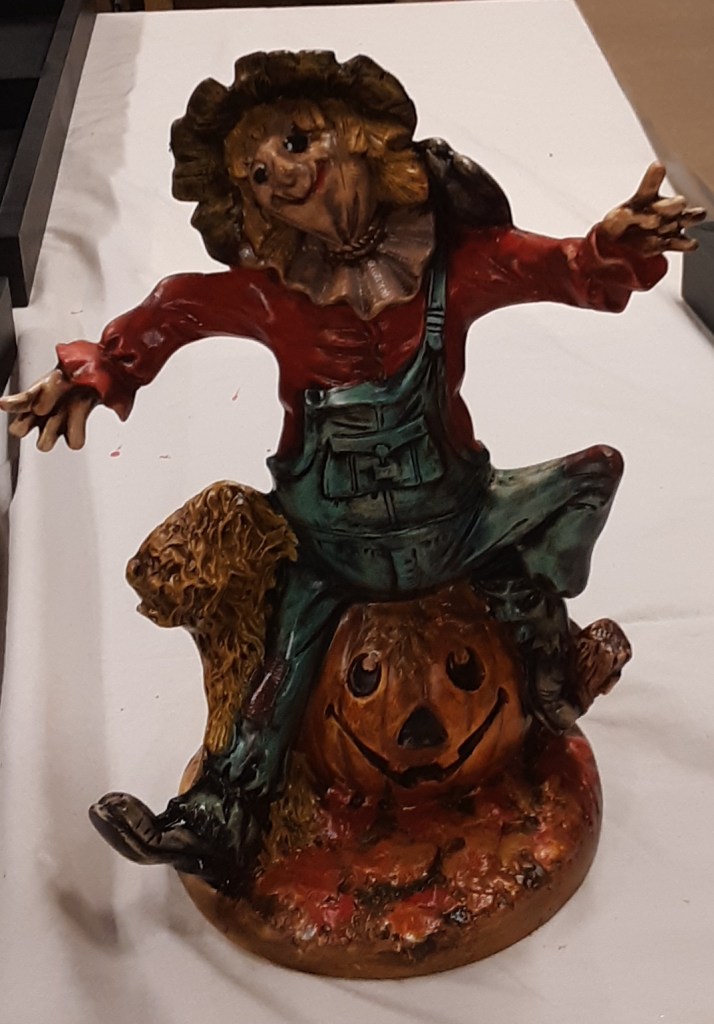
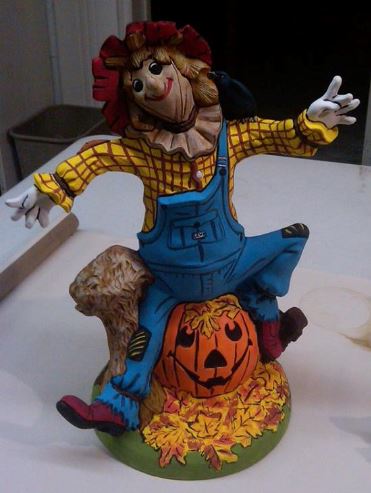
This twelve-inch whimsical scarecrow is painted with Fashenhues translucent stains. After applying two coats of basecoat sealer, we antique the entire piece with brown. Then add the colors, wiping back to bring out the detail. (This piece is $15 in bisque.) The picture shown is not done in Fashenhues.
Mishima is a technique of inlaying slip,
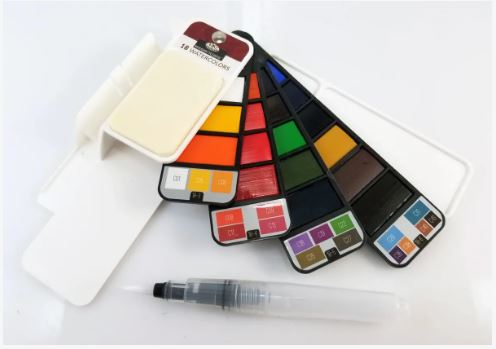
This compact watercolor Flip Kit comes with 18 concentrated colors, and Aqua-Flo brush, mixing tray and dabbing pad. This is designed for any surface where watercolor can be used. With ceramics we’re using it over the top of acrylic finishes for designs and blending and over the top of glazed surfaces that have been sprayed with porcelain or super matte finish. Colors need to be spray sealed and are not for food surfaces. Does not require firing. The colors swivel out and fold back up into the compact set.
This soft-sculpture turkey is fun to paint either in underglazes or in stains. The lesson here is learning to add multiple fabric patterns to various sections of the turkey. This makes a nice centerpiece for your Thanksgiving table or buffet and can be paired with soft-sculpture pumpkins.
This David Hoff project can be painted with either EZ strokes or Concepts underglazes. EZ strokes are more concentrated colors if you have them available. Let dry twenty-four hours before glazing.